- Customer Service 866-837-3065 Make A Payment (866) 558-3328
- Client Portal
- Consumer Support
 Providing Creative Solutions to Common Problems
Providing Creative Solutions to Common Problems
Providing Creative Solutions to Common Problems

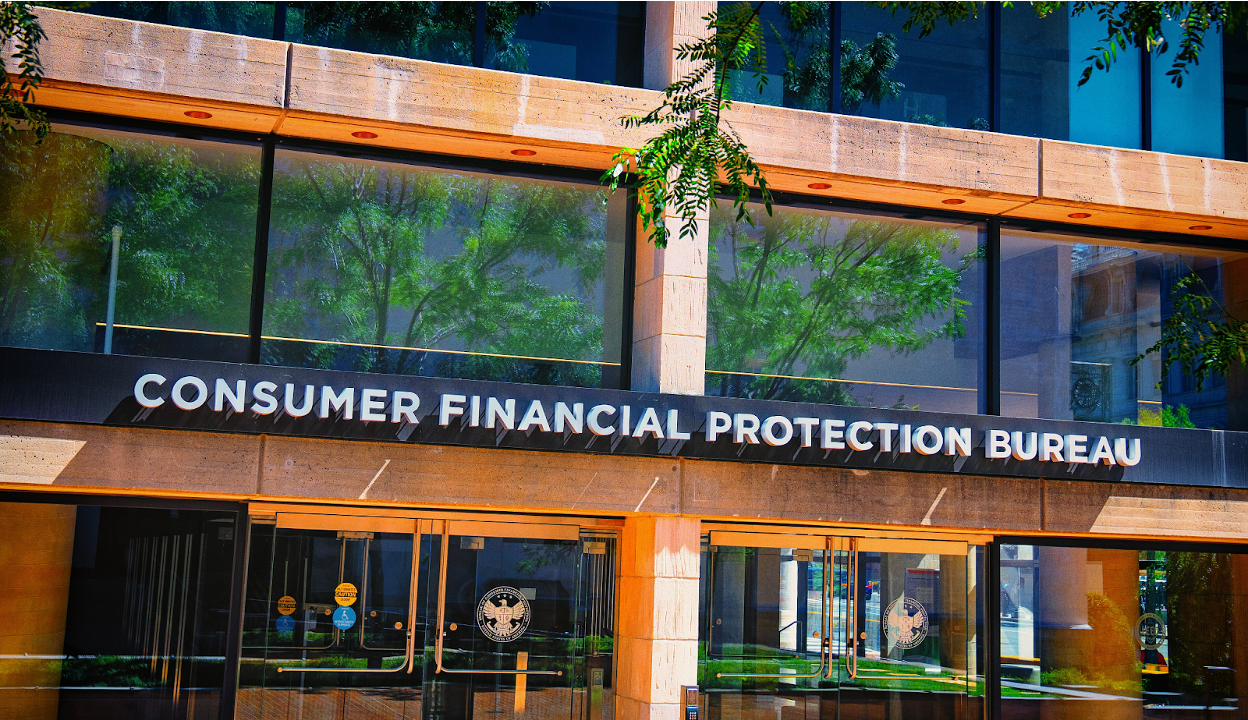
The Consumer Financial Protection Bureau (CFPB) has been the primary federal regulator overseeing debt collection practices since it took over rulemaking authority from the FTC under the Dodd-Frank Act. For businesses that rely on third-party collections, staying current with CFPB rules directly affects recovery outcomes, compliance risk, and vendor selection.
Heading into 2026, the regulatory picture looks markedly different from even a year ago. The CFPB faces an existential funding crisis, Regulation F remains the core federal framework, and states like California are stepping in with new commercial debt protections. We break down the key rules, recent developments, and what B2B creditors should watch for this year.
|
Southwest Recovery Services: Get Your Money Back 20+ Years Experience | Texas-Based | Contingency Only – You Pay When We Collect
Built for Commercial Collections:
The Southwest Recovery Difference: ✓ Contingency only – no upfront costs ✓ Veteran collectors with respectful omnichannel outreach ✓ Priority sectors: trucking, logistics, contractors, oil & gas ✓ Clear reporting on account status and outcomes Trust & Results You Need: Nationally recognized ethical collections agency with 12 offices across six states. Compliance-first approach with no threats or guarantees. |

Regulation F, which took effect in November 2021, remains the primary federal rule governing how debt collectors communicate with consumers and conduct their operations. It implements the Fair Debt Collection Practices Act (FDCPA) and applies to third-party debt collectors nationwide. Notably, the FDCPA and Regulation F apply to consumer debt collection—not to commercial or business-to-business debt directly. However, many ethical collection agencies voluntarily apply similar standards to their commercial practices.
Key provisions of Regulation F that remain fully enforceable in 2026 include restrictions on communication frequency—specifically, the rule presumes that more than seven calls within seven days per debt constitutes harassment—requirements for itemized validation notices when first contacting a debtor, and a clear prohibition on suing or threatening to sue over time-barred debt. The rule also formalized how collectors may use newer communication channels, such as email and text messages, requiring opt-out mechanisms and restrictions on messages visible to third parties.
For B2B creditors evaluating collection partners, understanding that your agency adheres to Regulation F standards is a strong indicator of professionalism and reduced risk.
The CFPB secured $145 million to remain operational through March 2026 after a federal judge rejected the administration’s argument that the Federal Reserve’s operating losses made the CFPB’s statutory funding mechanism unavailable. The judge called the move a transparent attempt to deprive the agency of its resources and ordered the Bureau to continue requesting its legally mandated transfers.
Despite this reprieve, the CFPB’s long-term outlook is far from settled. Three separate legal battles could still significantly weaken or shut down the agency, including an employee lawsuit challenging mass layoffs (with D.C. Circuit arguments scheduled for February 2026), a multi-state attorney general challenge to force continued operations, and broader questions about the constitutionality of every CFPB action since 2022.
If the CFPB’s funding were to lapse, most enforcement activities, supervisory examinations, and rulemaking efforts would pause. As a practical consequence, financial institutions bear increased responsibility for identifying and addressing compliance issues internally. State attorneys general have historically increased enforcement activity when federal oversight slows, particularly in areas like collections and fair lending.
For businesses hiring collection agencies, this environment makes it more important to choose partners with strong internal compliance programs. An agency that only behaves ethically when a regulator is watching is not a reliable partner.

One of the most significant developments for B2B creditors is California’s Senate Bill 1286, which took effect on July 1, 2025. This law amended the Rosenthal Fair Debt Collection Practices Act to subject collectors of certain commercial debts of $500,000 or less to many of the same practice requirements that previously applied only to consumer debt.
This is a landmark shift. Historically, the FDCPA and most state debt collection statutes applied exclusively to consumer obligations. SB 1286 now requires B2B credit managers and third-party collectors in California to follow the same stringent rules for pursuing commercial debts as they do for consumer debts. The law covers first-party and third-party collectors alike, applies to debts entered into, renewed, sold, or assigned after the effective date, and does not exempt banks or licensed entities.
For companies with customers or operations in California, this means your collection partner must now follow Rosenthal Act requirements on commercial accounts—including restrictions on threatening language, rules around third-party communications, and detailed validation notice obligations.
The CFPB is also reviewing the threshold that determines which debt collection firms fall under its direct supervisory authority. Under the current rule, a nonbank qualifies as a “larger participant” if it has more than $10 million in annual receipts from debt collection activities. That threshold was set in 2012. The advance notice states that the industry has consolidated significantly since then, with the number of firms shrinking from approximately 4,500 to as few as 2,500, while the share of firms above the threshold has nearly doubled.
Any changes to this threshold could expand or contract the pool of agencies subject to CFPB examination, affecting which firms face direct federal oversight. Comments on the review were due in September 2025, and any final changes could take shape over the course of 2026.
Given the regulatory uncertainty at the federal level and increasing activity at the state level, B2B creditors should focus on three practical priorities. First, vet your collection agency’s compliance infrastructure. Ask specifically about their adherence to Regulation F standards, even for commercial accounts, and how they stay current with state-level changes like SB 1286. Second, document your collection practices. In an environment where self-regulation matters more, having clear records of compliant practices protects your business. Third, choose a contingency-based partner. Agencies that only get paid when they collect are inherently aligned with your interests and less likely to engage in aggressive tactics that create legal exposure.

We have spent more than 20 years at Southwest Recovery Services building a collections operation designed specifically for commercial creditors who need results without risking their business relationships. We operate on a contingency-only model, with fees typically ranging from 10% to 25% depending on the account’s age and complexity.
Our compliance-first approach sets us apart. Our experienced collectors use respectful, omnichannel outreach via phone, email, text, and mail, guided by AI-powered tracking software that monitors every promise to pay.
With 12 offices across seven states, we are nationally recognized for ethical collections that protect your client relationships while recovering what you are owed. In a year when regulatory oversight may be unpredictable, partnering with an agency that holds itself to the highest standard is the smartest move a creditor can make.
Request a free quote to see how we can help
No. The Fair Debt Collection Practices Act applies only to consumer debts. However, many reputable agencies also voluntarily follow FDCPA standards on commercial accounts.
A validation notice is a written or electronic disclosure that a debt collector must send within five days of initial contact. It must include the amount owed, the creditor’s name, an itemization of the debt, and a statement of the debtor’s right to dispute the debt.
Regulation F presumes that calling more than seven times within a seven-day period regarding a particular debt constitutes harassment. Collectors must also wait at least seven days after a phone conversation before calling again about the same debt.
The CFPB has funding through at least March 2026, but its enforcement capacity is significantly diminished due to staffing cuts and ongoing legal battles. State attorneys general and the FTC may take on a larger enforcement role during this period.
At Southwest Recovery Services, we operate on a contingency-only model with no upfront costs, use AI-guided tracking across all communication channels, and have over 20 years of experience in commercial collections. With 12 offices across seven states, we prioritize compliance, relationship preservation, and transparent reporting on every account.
*Note: Recovery rates mentioned are for general reference only and not guaranteed. Actual results vary by account and industry. Contact Southwest Recovery Services for a customized quote.



We make it fast and easy to refer past due and delinquent accounts to our professional recovery agents. You decide the range on what you will accept on each case, and you ONLY pay a percentage of what we actually collect to resolve the case. Ready to get started, or want to learn more? Fill out this form and a dedicate account manager will call you to get started.